A few months ago, we stayed outside Chatsworth in the Chattahoochee National Forest (Conasauga District) in the North Georgia Mountains. During our trip, I wanted to visit the Chief Vann House, about ten miles away. Unfortunately, the site was closed to the public on the days of our visit.
We decided to make a return trip during the Vann House Days festival in late July. The festival honors the 67th anniversary of when Georgia State Parks established this area as a historic site. Volunteers led tours of the house while demonstrating butter churning, doll making, and corn grinding.
Typically, visitors must take a guided tour at the top of each hour to see the inside of the Chief Vann House. But due to the festival, we could take a self-guided tour while docents stationed in each room gave us facts and details.
Chief Vann House
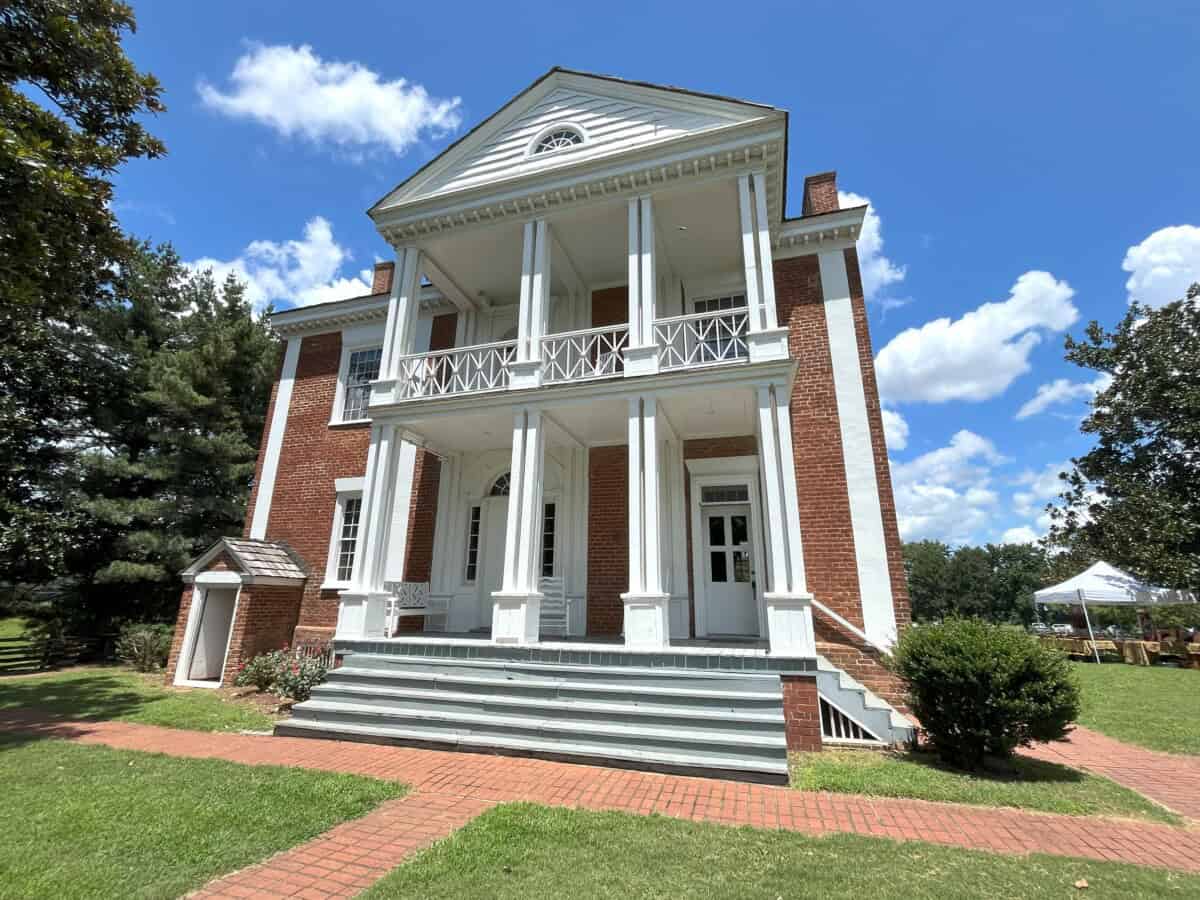
The imposing brick, three-story house is not what I was expecting. We had previously toured New Echota State Historic Site near Calhoun years ago, so I knew that the Cherokee Nation didn’t sleep in wigwams and teepees. Still, I didn’t expect this elaborate plantation house with tall windows, high ceilings, and outdoor verandahs. We later learned this was the first brick house in the Cherokee Nation.

James Vann, born to a Cherokee woman and a Scottish trader in the 1760s, became a wealthy and savvy businessman. He owned and operated ferries, taverns, and trading posts. In 1804, he built this house, called Diamond Hill, along the Federal Road (a US toll road from Knoxville to Savannah) that ran through Cherokee lands. Workers fired the bricks in kilns near the house, and Vann’s sawmill, a couple of miles away, produced the floorboards and beams. Over 100 of Vann’s slaves built the house.
The tribal leader also donated part of his 800-acre land to the Spring Place Moravian Mission & School. For over 30 years, the school taught Cherokee children to read and write. Very little remains of the mission, which became the headquarters for the Georgia militia in 1833 in preparation for the Cherokee removal.
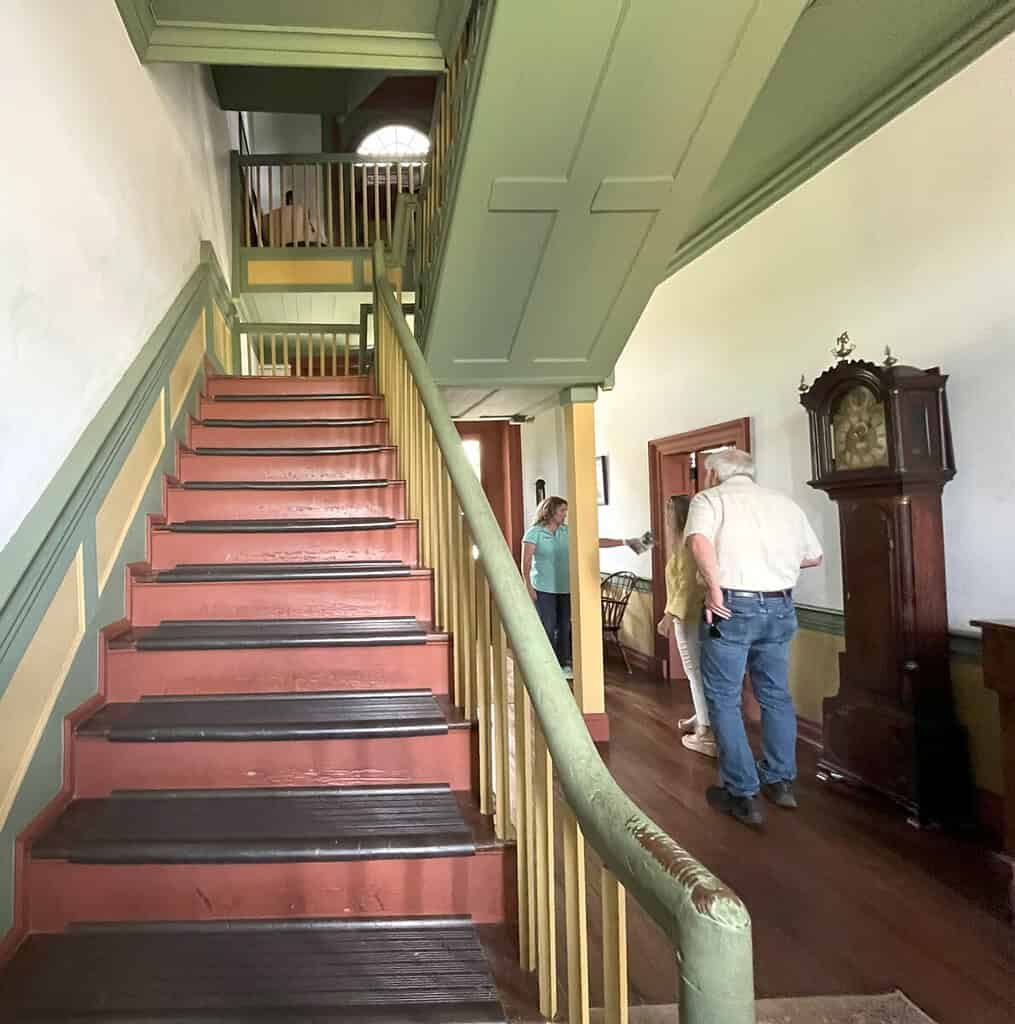
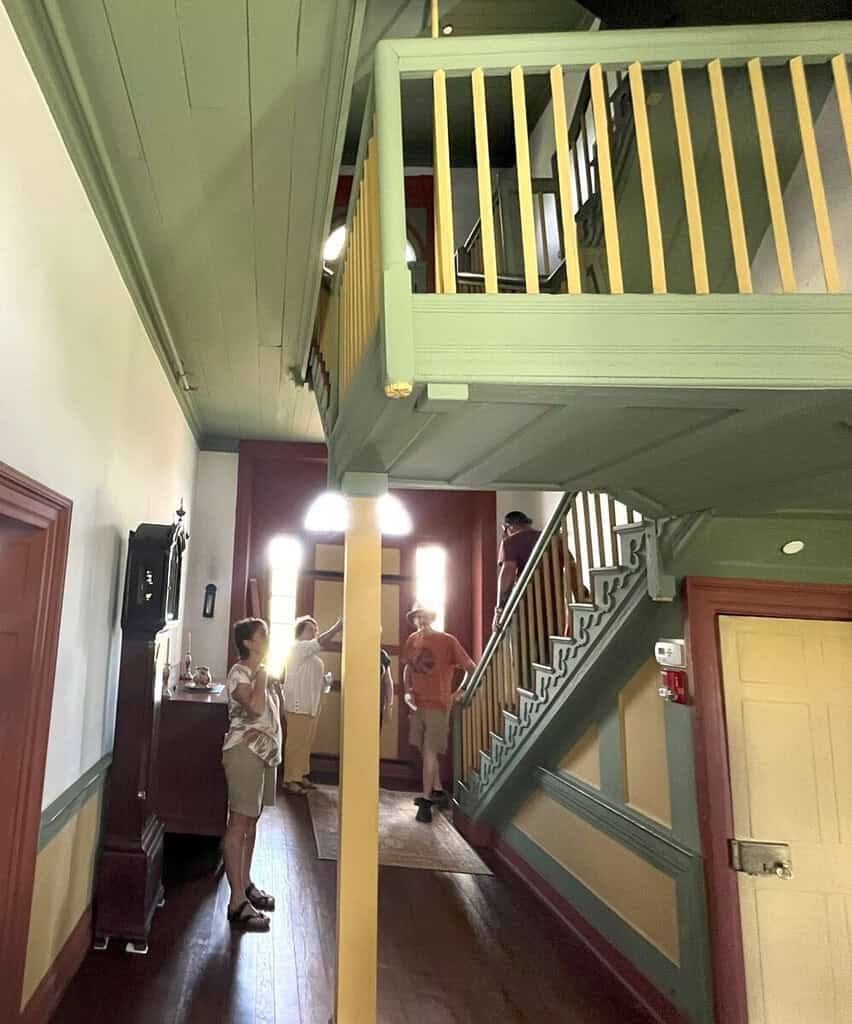
Boasting colors original to the house in pale green, yellow, and rust, the entrance hall extends from the front to the back of the house and features a floating staircase. Today, a yellow post gives support to the landing halfway up to the second floor – after all, the house is over 200 years old. But back in the day, the yellow post wasn’t there, creating the illusion that the staircase floated above the entrance hall.

Struggling with alcohol, Chief James Vann became violent at times, engaging in fights and mistreating his slaves. He even killed his brother-in-law, John Falling, in a duel in 1807. An unknown assailant murdered him in 1809 at Buffington’s Tavern, about 60 miles away. Although Vann had multiple children and wives, he left most of his property to his son, Joseph (nicknamed Rich Joe).
Joseph proved even more successful than his father and even entertained President James Monroe at his house in 1819. Before the President’s visit, Joseph made improvements to the house, including the wood paneling, floating staircase, and exterior columns. Joseph, a representative to the Cherokee Nation, traveled to New Echota in 1827 to help write the Cherokee constitution.
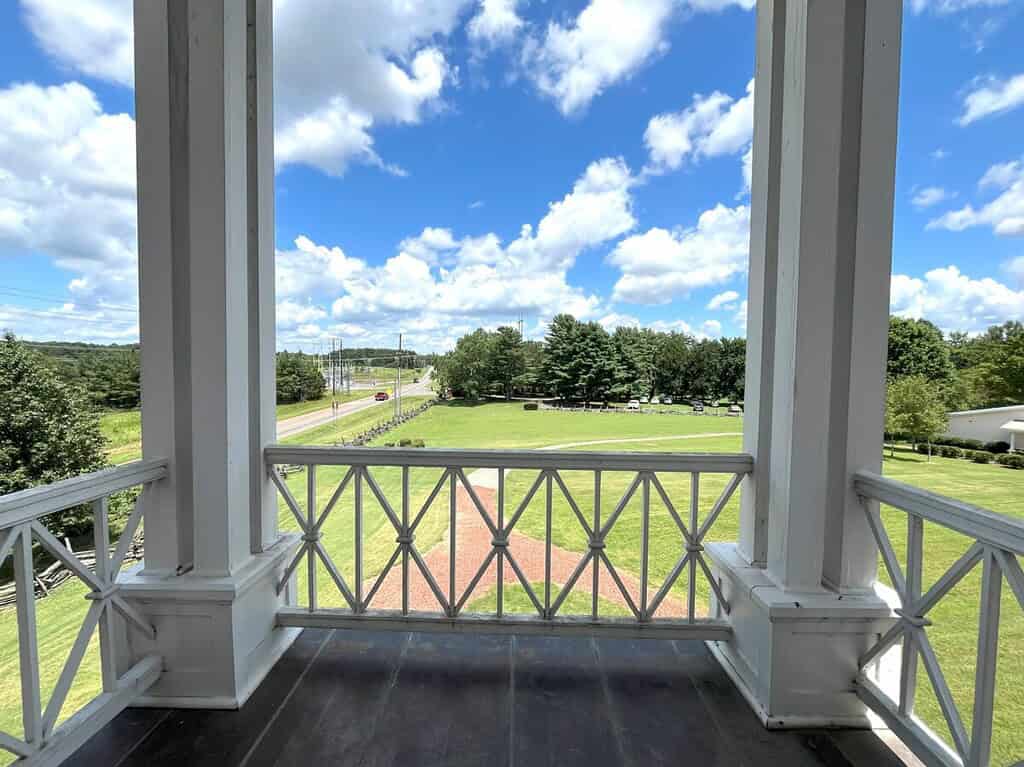
Upstairs, a central hall (almost identical to the one on the main floor) stretched from the front to the back of the house. A larger balcony facing the Old Federal Road gave Vann a widespread view of his plantation, which at the time included 95 outbuildings and over 1,000 peach trees.
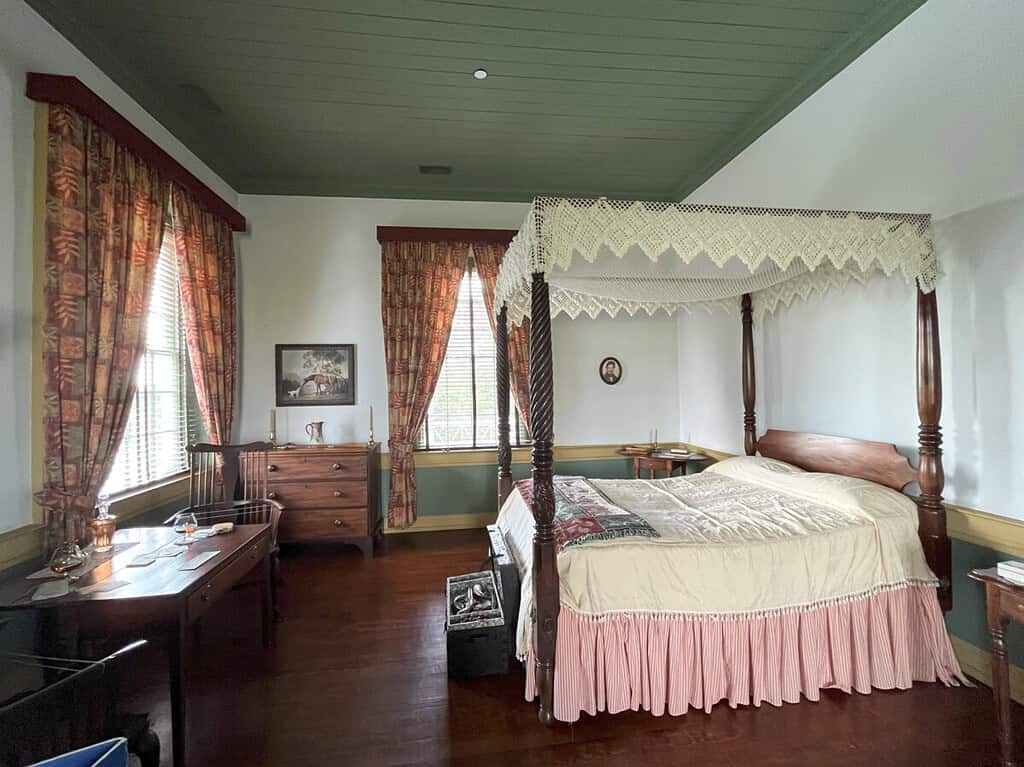
Two bedrooms come off the central hall. The bedroom over the parlor served as a guest room and is where President Monroe stayed. The primary bedroom sits above the dining room. Stairs lead to the third floor with two smaller bedrooms for Joseph’s children. Instead of rooms with 12-foot ceilings, the third-floor rooms feel cramped with 6-foot ceilings.

Cellar and Outbuildings
From the outside of the house, we walked downstairs into the cellar area, which had two rooms. Outside, we explored the outbuildings and watched demonstrations by local artisans.
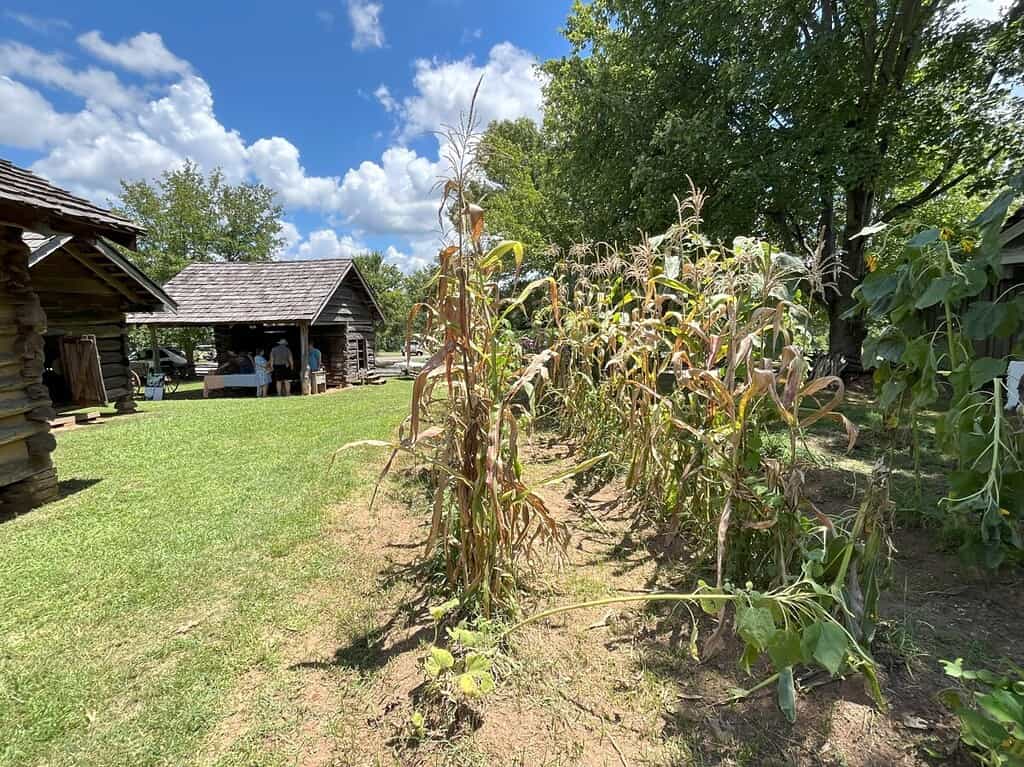
By the 1830s, Chief Joseph Vann’s livestock totaled 1,000 cattle, 150 hogs, and 250 horses. To shelter some of the animals, including his racehorses, he built the largest barn in the Cherokee Nation. Boasting almost 70 by 22 feet (and valued at $500), the barn was much larger than the 50 slave cabins, each measuring 16 x 14 feet. The barn and slave cabins no longer exist. However, the park brought in several Cherokee structures from other parts of North Georgia. We walked into one of the Cherokee cabins, as well as the cookhouse and corn crib.
In 1832, Chief Joseph Vann unknowingly violated a new state law when he hired a white man to oversee the plantation. Because of this violation, Colonel William Bishop of the Georgia Guard forced Vann and the family out of the house. Bishop soon took up residency. Soon, Spencer Riley laid claim to the property via the Land Lottery of 1832. While Bishop and Riley fought over the house, the Vann family moved to Tennessee, and then ultimately to Oklahoma as part of the Cherokee removal. In a surprising twist of events, Vann later sued for the loss of his property. The state awarded him $19,600.
Vann died in 1844 in a boating accident. The Vann House in Georgia changed ownership frequently, with some reports suggesting as many as 17 times, until 1952. The Georgia Historical Commission purchased the house and spent six years restoring it to its former glory. One of the volunteers shared with us that her mother was one of the park’s first docents, and she spent most of her childhood visiting the park.
Museum
In 2002, the state opened the 3,000-square-foot interpretive center with artifacts and more information about the Trail of Tears. We also learned about slave life on the plantation, found in the diaries and letters of the Moravians at the mission, as well as African American History at the Chief Vann House, edited by Tiya Miles.
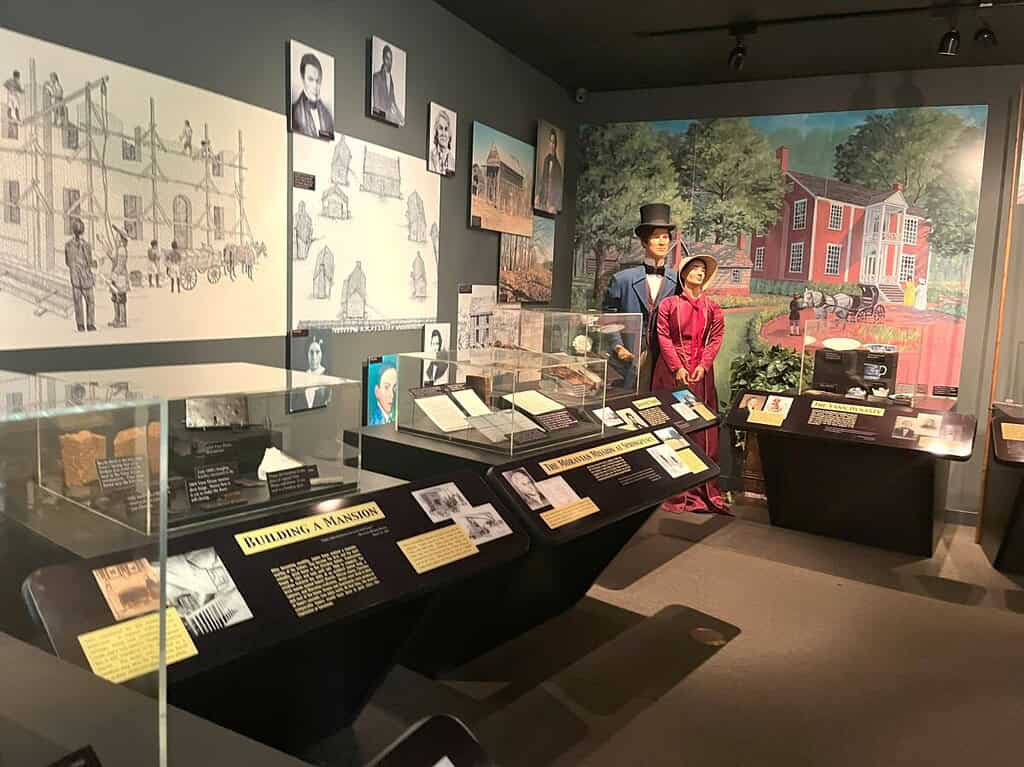
Displays tell the story of several slaves. One was a female slave, Patience, who lost both of her feet on the trek from Charleston to Chatsworth sometime around 1805 (under Chief James Vann). She completed her chores on the plantation by scooting on her knees. Twice married, she suffered a brutal beating while pregnant in 1813, and nothing else is known about her.
Before leaving, we watched the 15-minute film in the museum. The movie gives further detail about the Vann family, the Georgia Guard’s takeover of the house, and the Trail of Tears. The forced removal caused the deaths of 25% of the Cherokee population. One of those was Chief Joseph Vann’s sister, Delilah Vann McNair.
Conclusion
This house changed my preconceived notions about the Cherokee living in North Georgia. Admission is $7 for adults, $6 for kids ages 6-17, and $5.25 for seniors. For more information about Chief Vann House, visit the website here.