A few months ago, I wrote a post for Mommy Poppins on Kid-Friendly Science Museums in Atlanta. For my research, we visited the Mimms Museum of Technology & Art in Roswell, one of the closest suburbs to Atlanta. The timing was perfect because Thing 1 was home for college spring break and loves technology.
Mimms is located in a former CompUSA (remember those?). Originally called the Computer Museum of America, the exhibits come from the personal collection of Lonnie Mimms. An Atlanta native and electrical engineering graduate from Georgia Tech, Mimms has been collecting computers and technology gadgets for over 40 years.
Mimms loaned out pieces of his collection to the Smithsonian and other institutions before he and his wife, Karin, tested out the museum concept with several pop-up exhibits. The permanent museum opened on the 50th anniversary of Neil Armstrong’s walk on the moon on July 20, 2019. With the addition of a video game exhibit, an enigma machine, and a collection of Salvador Dali prints, the museum changed its name to Mimms Museum of Technology & Art in early 2025.
STEAM Timeline
After walking through a wide corridor with arcade games such as Ms. Pac-Man, Donkey Kong, and Centipede, as well as wall displays of early calculators, we paid for our tickets in the gift shop. The museum worker instructed us to take a picture of the map, and work our way around the exhibits.
The items on display in the 35,000 square foot museum are reportedly less than 10% of Mimms’ total collection. The husband-wife team wanted to relay the stories behind the objects, which takes lots of space – especially with the STEAM Timeline.
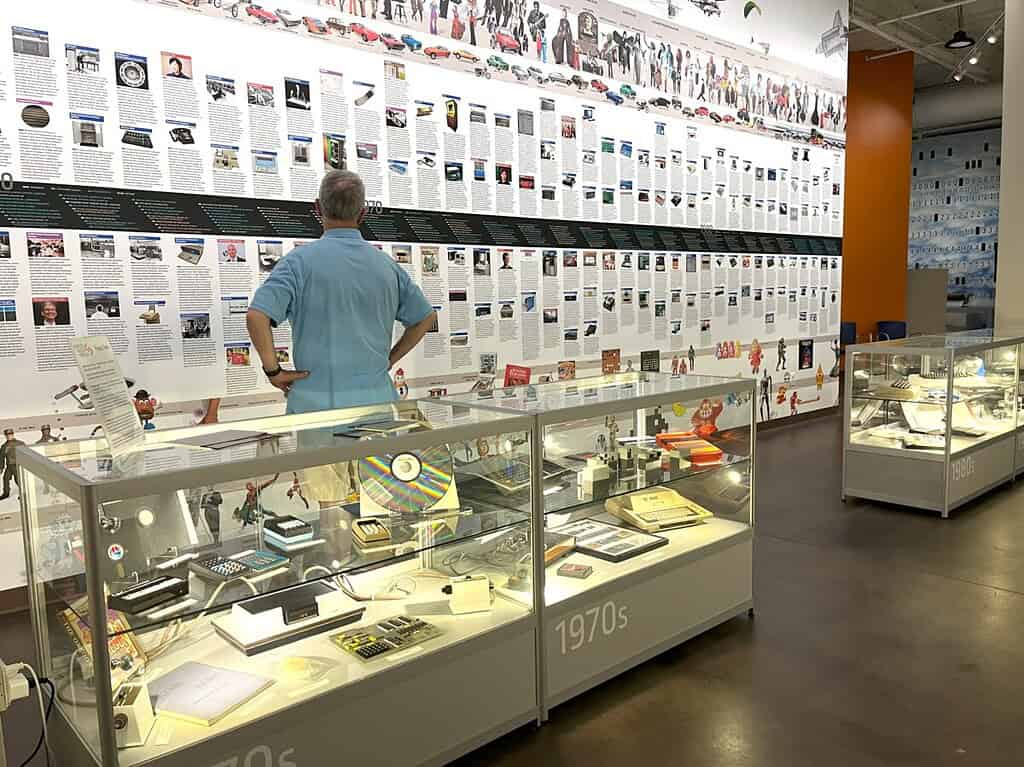
The expansive timeline records major innovations, organizations, and key players up to the present. Mathematical milestones and modes of transportation, as well as popular fads and toys, also follow along the timeline. I hadn’t considered it, but items like the abacus and vacuum tubes laid the groundwork for later computers and technology. While you don’t have to read every single blurb, you will learn a lot of history along the 1,000-square-foot timeline.
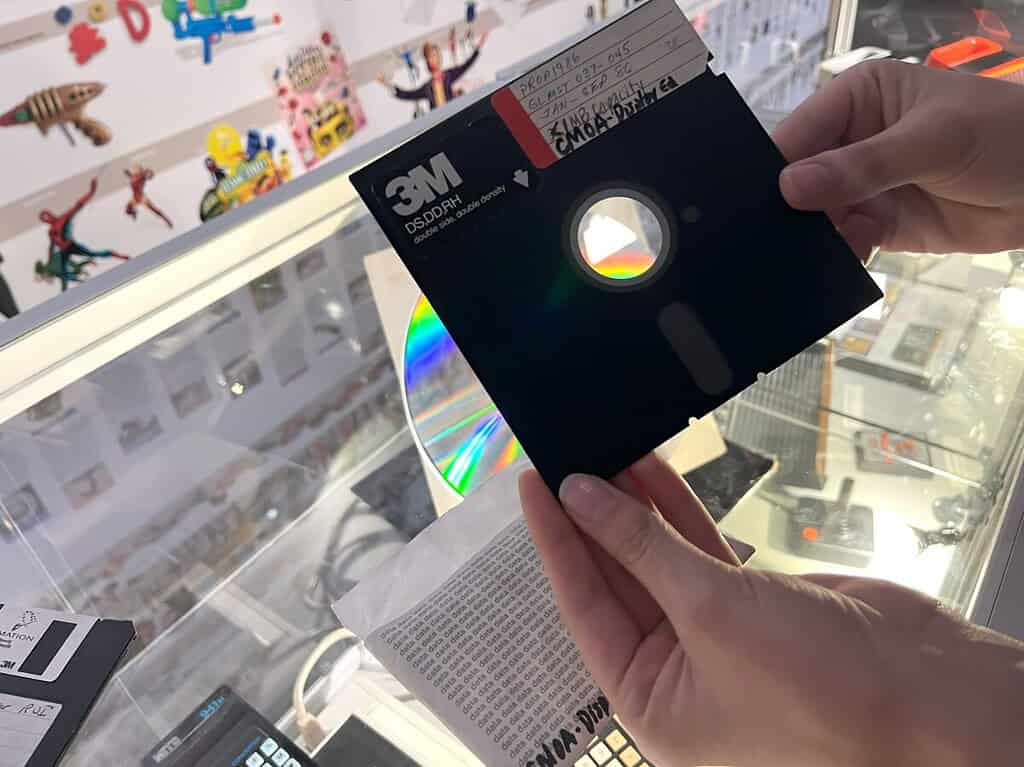
Cases in front of the timeline display various items. Thing 1 had heard of floppy disks, but she was only thinking about the 3.5-inch versions (which really weren’t floppy). She got to hold the 5.25-inch floppies that Dear Hubby (DH) and I remember using. I recall having to use a protective sleeve to transport it in a backpack, and if you put the floppy near something magnetic, you could lose all your data.
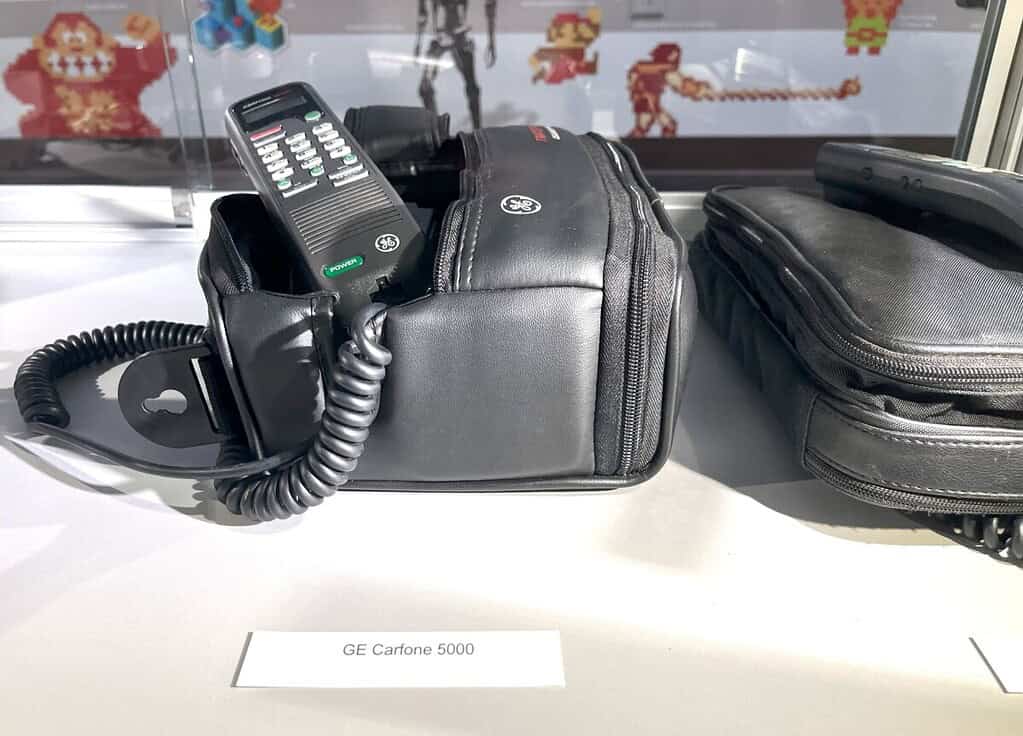
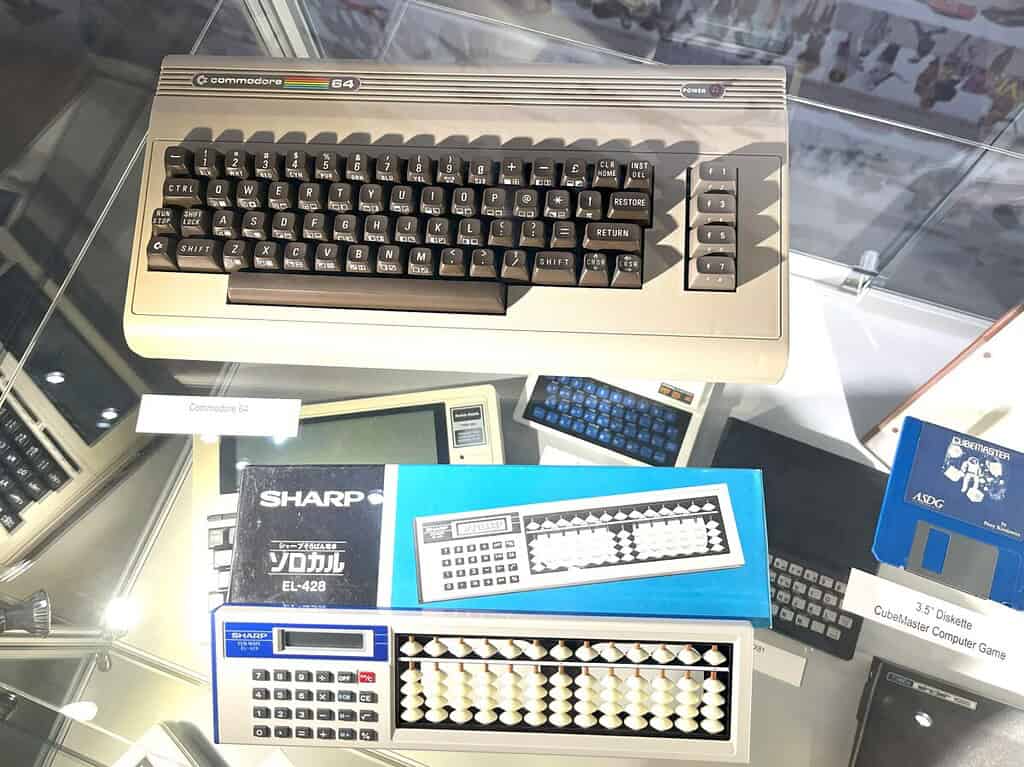
Other exhibits included early car (not cell) phones in the big bag, a View Master, Sony Walkman, Sony Watchman Stereo, and a Microsoft Windows operating system box. DH liked seeing the Apple Lisa while I laughed at the Commodore PET 2001 Series personal computer with the cassette deck. There were items we’d forgotten about such as LaserDisc players, flash camera bulbs, and picture slides.
Punchcards and Mini Computers
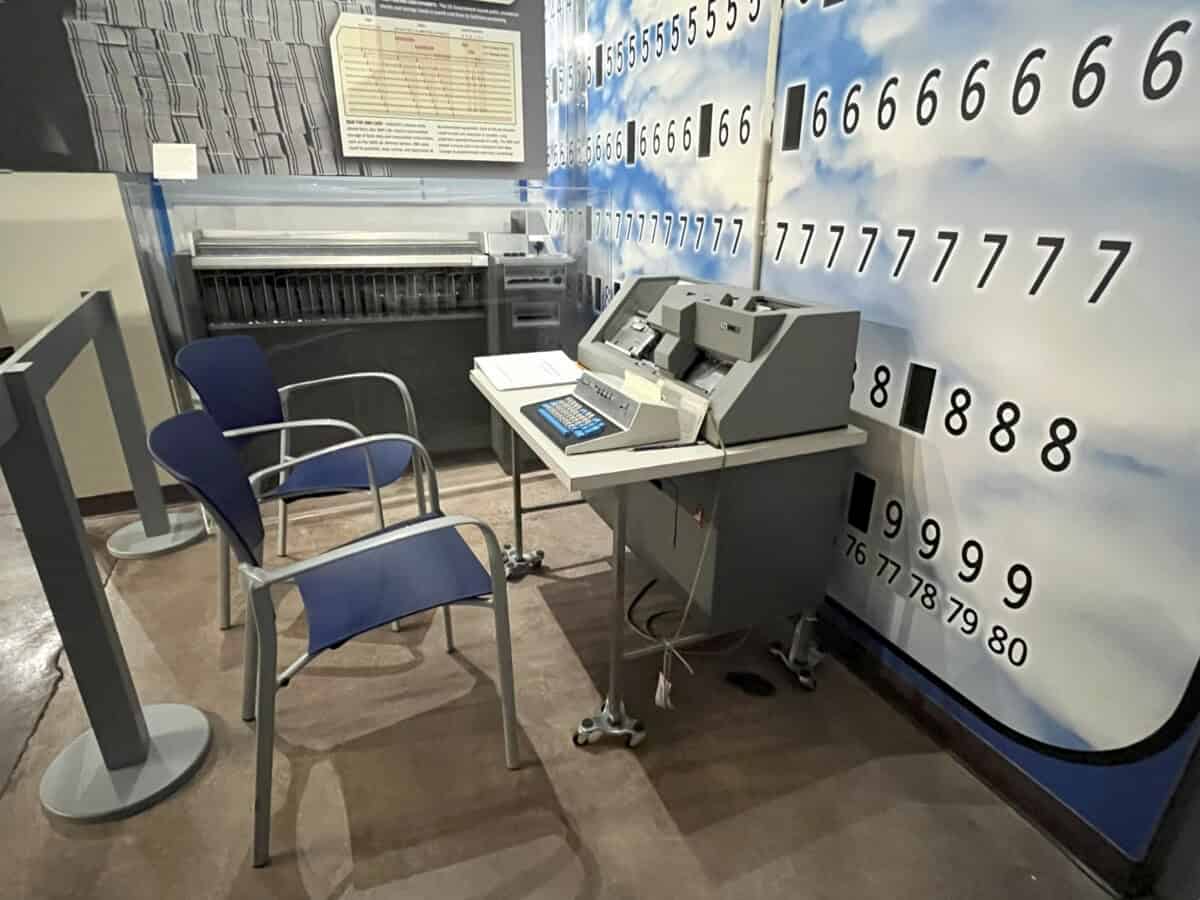
We learned the science behind punch cards. This stemmed from the Jacquard Loom (also on display), invented around 1804. Joseph-Marie Jacquard used punch cards to create patterns in textile fabrics so they could be mass-produced. I even have a couple of Jacquard dresses in my wardrobe at home. Herman Hollerith took the technology a bit further with electromechanical tabulating machines used in the 1890 Census. His company merged with others in 1911 to become what is known today as IBM.
Art at Mimms – Micro Chips, Byte Wall, and Salvador Dali Prints
You might notice that the museum’s new name includes “Art.” That’s because Mimms intertwines art with technology. The exhibit “Chips: Powering the Modern World” artfully arranges over 150 microchips from the 1940s to the present. The visual exhibit includes the Intel 8080, an 8-bit processor developed in 1974, as well as the Texas Instruments TMS9900 16-bit processor developed a few years later. Nearby, a wall displays every single cover from Byte Magazine. The magazine ran from 1975 to 1998.
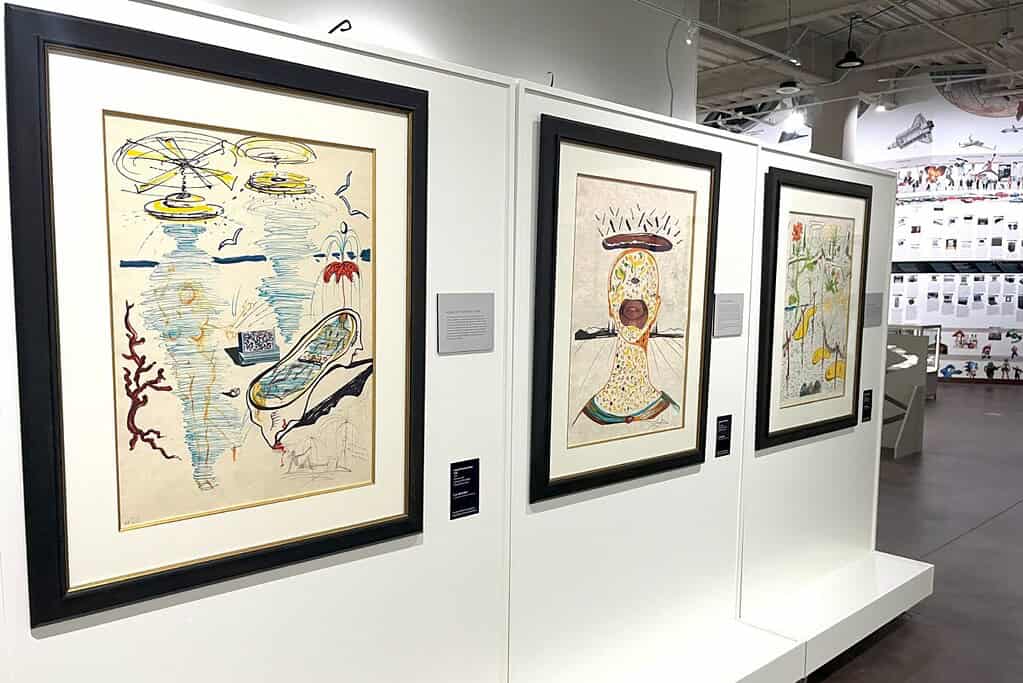
In what almost seems unrelated to computers, there is a special exhibit of 30 Salvador Dali prints. Titled “Dali’s Lab: Surrealism Meets Tech,” the signed prints show the inner workings of the artist’s mind during the 1970s. The exhibit will continue until February 2026.
Supercomputers
With over 70 supercomputers on display, Mimms boasts one of the largest collections in the country. The first supercomputers were developed by Seymour Cray at Control Data Corporation. On display are many Cray supercomputers, including the Cray-1, considered the first supercomputer in 1976. Other supercomputers on display include later models by Sun Microsystems, as well as a Pixar Image Supercomputer designed for some of the company’s first animated films.
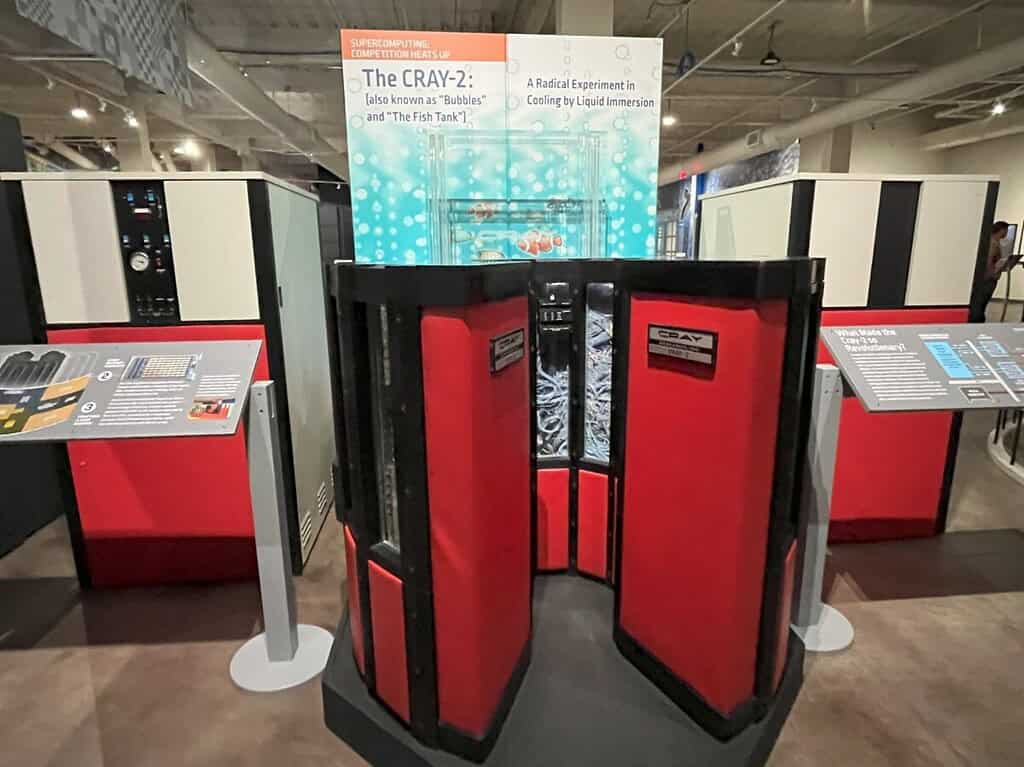
One of the newest additions to the museum is the 1985 Cray-2 supercomputer used by NASA. The 2.5-ton machine used four CPUs and had a liquid-immersion system to keep it from overheating. It was nicknamed Bubbles because of the cooling system.
Space Exhibit
By this time, I was getting overwhelmed, so going into the Space exhibit was a nice change of pace. In the center of the circular room is a 70% scale model of Apollo 11 Lunar Module with an 8-foot-tall astronaut. A timeline introduces visitors to the Space Race between the Americans and Russians, culminating with framed front-page newspapers announcing the moon landing in 1969. On another wall, models of rockets illustrate their significant evolution from the Redstone Rocket launched in 1953 to the much larger and powerful Saturn V, used in the 1970s and 1980s.
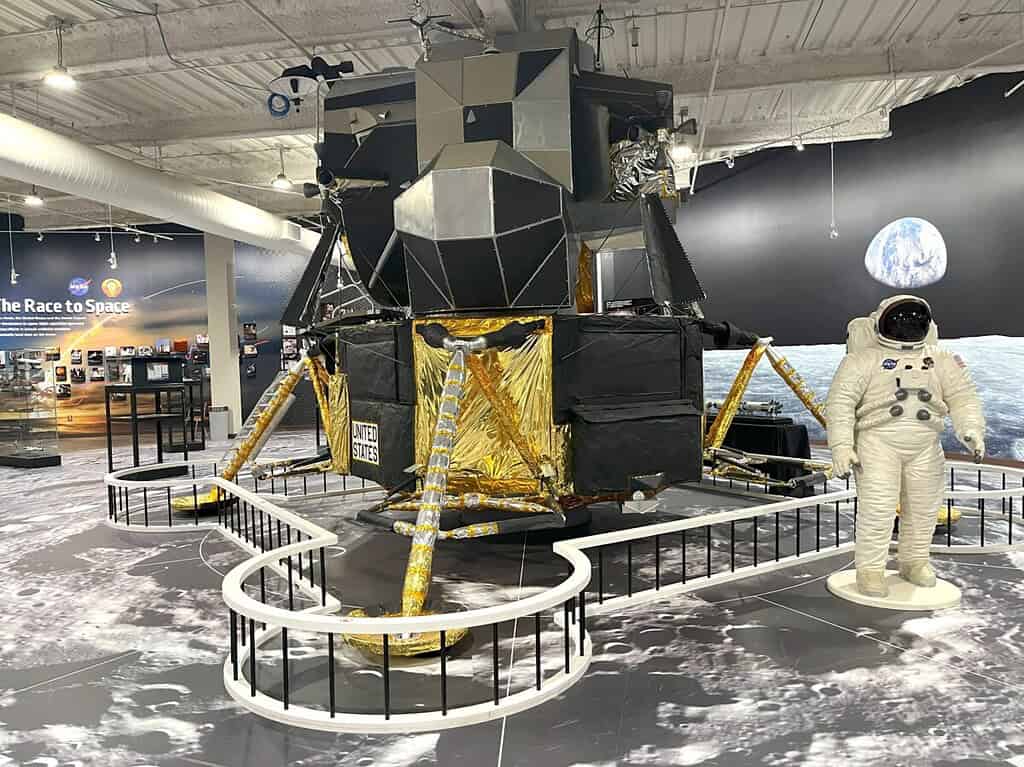
While all this is great, what does it have to do with computers? Everything! It’s computers that got mankind to outer space in the first place. On display is the IBM 360/65 used for Apollo ground missions. The museum also showcases the Apollo Guidance Computer (AGC) and the Display Keyboard (DSKY) used onboard Apollo 7 for navigation, as well as the NASA GRiD Compass (some say the first laptop computer) used on space shuttles in the 1980s.
Enigma Machine and Interactive Exhibits
In the last section of the museum, we came to the Enigma Machine, used by the Germans in WWII. Had it not been for the codebreakers at Bletchley Park in England, Germany may have won the war. Displays explain telegraphs and Morse Code, as well as early code breakers, such as Nigel de Grey, who deciphered Germany’s Zimmerman Telegram in WWI.
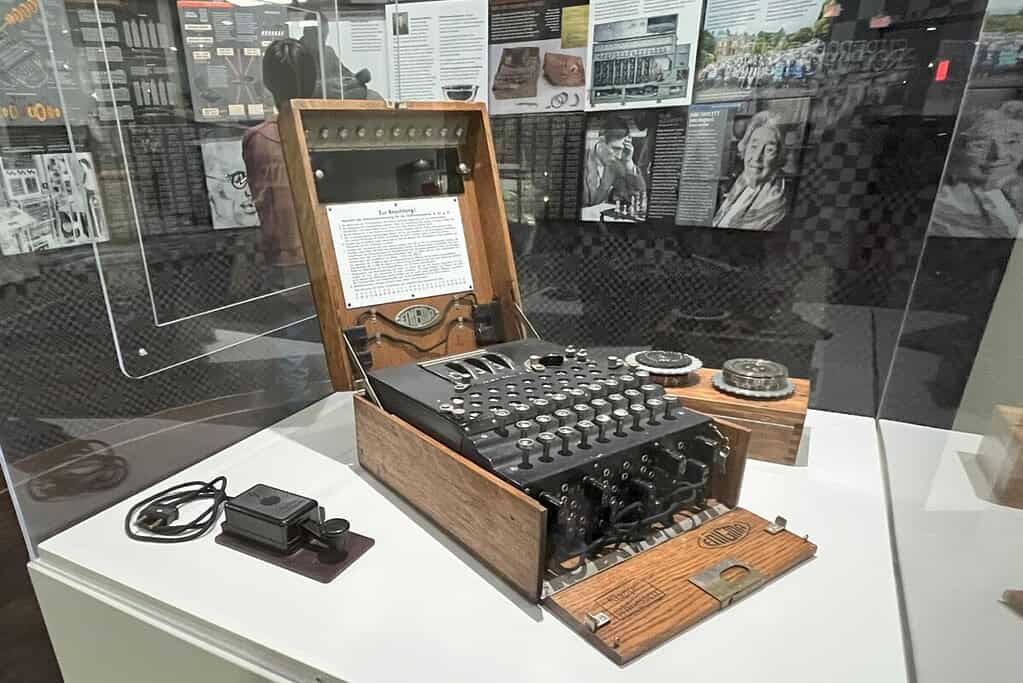
The workings of the Enigma Machine are explained (although I can’t explain it), as well as profiles of Mavis Lillian Batey, Janet Fawcett, and other cryptographers. Working Enigma Machines, like the one at Mimms, are rare because the Axis powers tried to destroy them rather than allow them to be captured by the Allies.
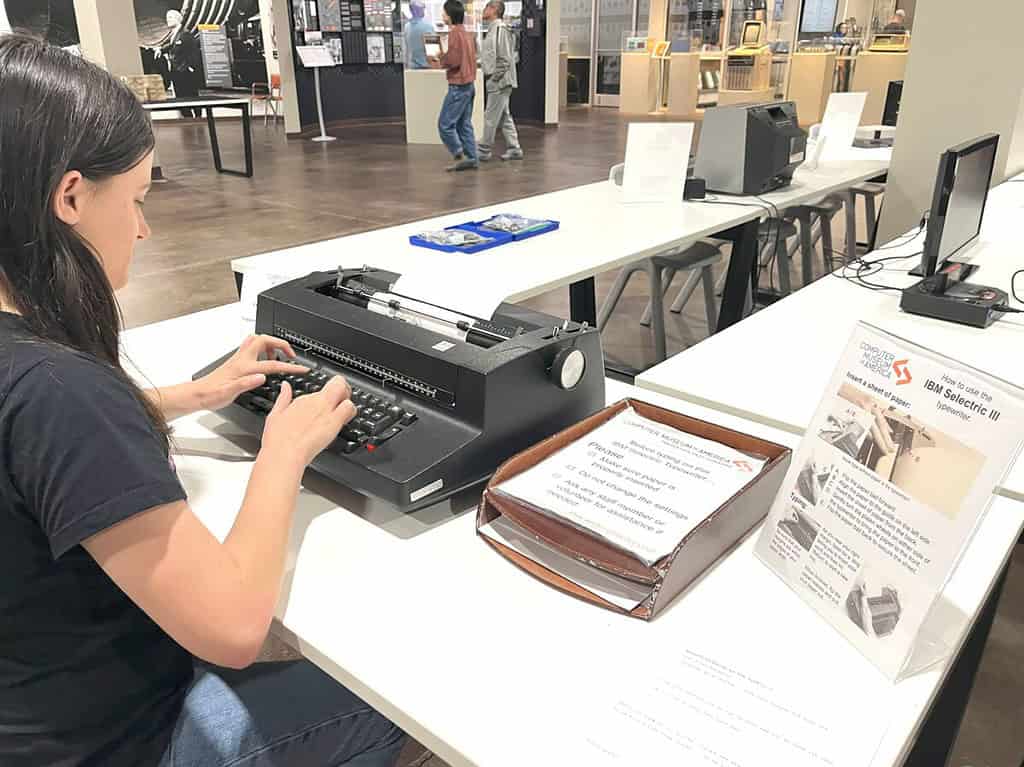
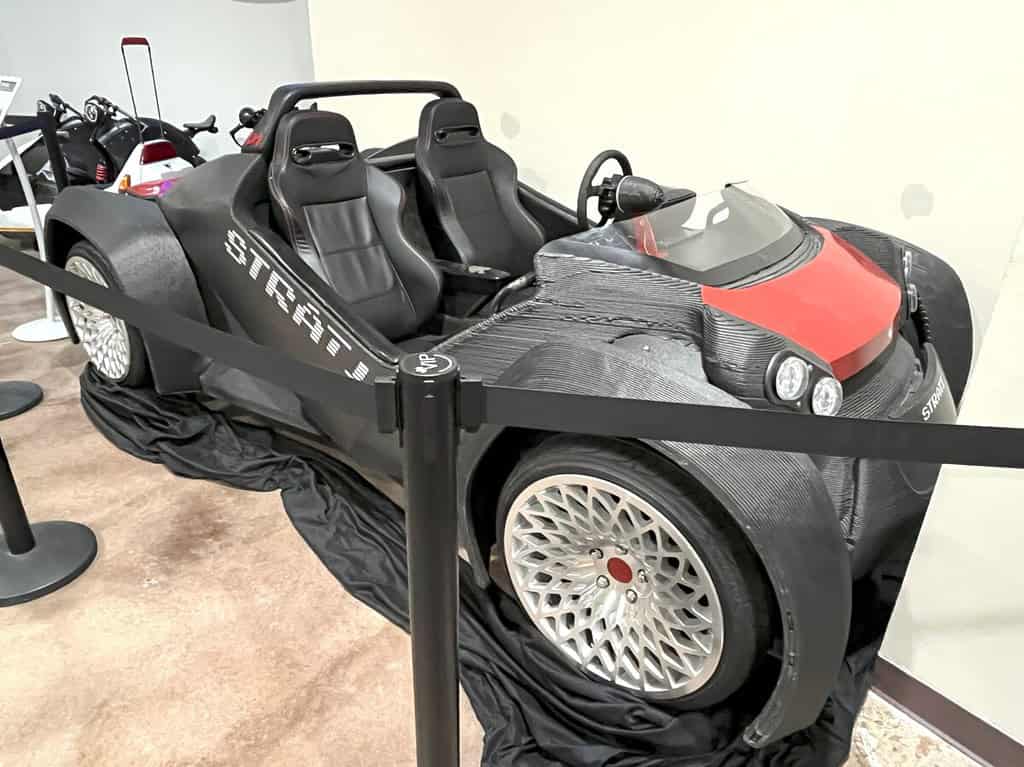
Visitors can sit down at long tables and try out some of the old technology. We played Star Trek on an early 1980s Vectrex console, typed on the self-correcting IBM Selectric typewriter, and watched a Girl Scout Troup working on earning technology badges. We walked past a rotary dial phone and the Strasi, the first 3-D printed electric car. Topping 40 mph, the vehicle definitely works best around town rather than on the highway.
Conclusion
Mimms Museum of Technology & Art is open every Wednesday through Sunday from noon to 5 pm. Admission is $18 for adults and $12 for kids ages 11-17. Family rates, student rates, and senior rates are also available. Because it’s located in a former CompUSA store, there is plenty of room to walk around and see all the exhibits. For more information, click the museum’s website here.
In the spring of 2026, Mimms plans to open an extensive exhibit on Apple with over 2,000 artifacts. There will be lots of interactive exhibits, including photo ops in front of a model of Steve Wozniak’s VW bus. You can learn about it from the video here.