
When Thing 1 and Thing 2 were toddlers, Dear Hubby (DH) and I took them to the Southern Museum of Civil War & Locomotive History, located in Kennesaw. I remembered that the museum focused on General, the locomotive from the Andrews Raid during the Civil War. Most people know the Andrews Raid as the Great Locomotive Chase.
When Thing 1 and I were looking for things to do this summer, we decided to make a return trip to the museum. Over the years, the museum has expanded to include a complete children’s section and an archives building.
Railroads: Lifelines of the Civil War
I’d never thought about this before, but the Civil War was considered “the first railroad war.” The first major section of the Southern Museum highlights this fact with artifacts and displays. In fact, the museum sits next to the old Western & Atlantic railroad line. In looking at a map, most major battles occurred close to railroads
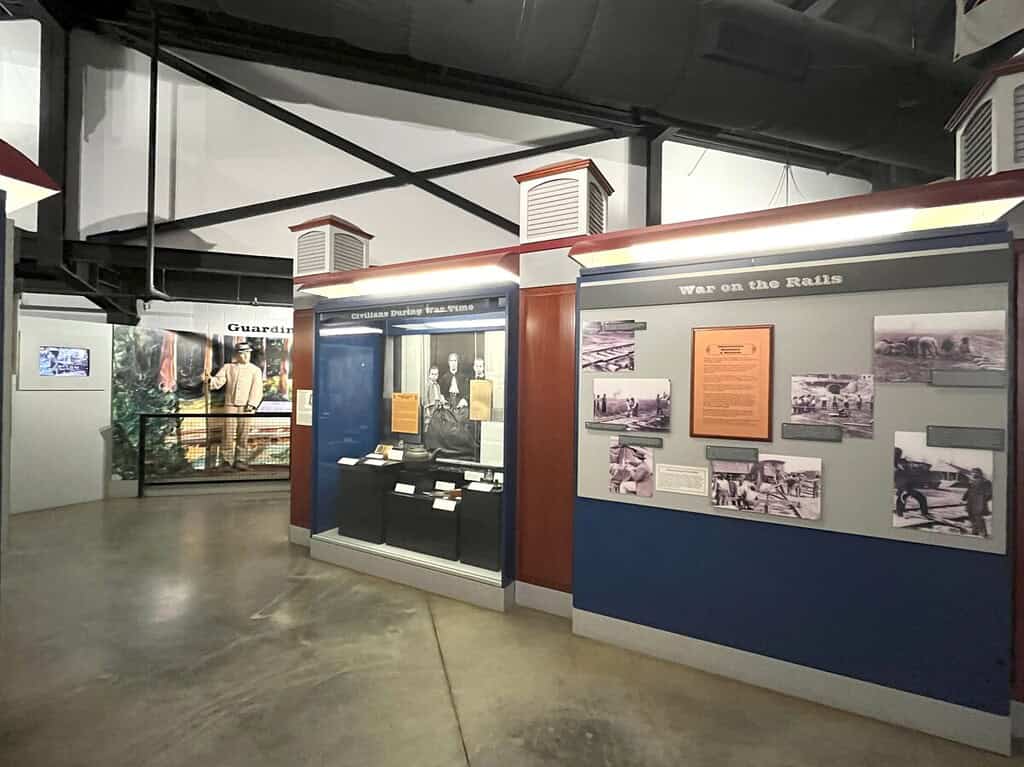
For the first time in history, troops and supplies could be transported more quickly across the country using railroads. For example, in 1863, Confederate General Longstreet moved troops over 900 miles from Virginia to Tennessee quickly enough to help win the Battle of Chickamauga in Georgia. In response, Major General Hooker moved 20,000 troops and supplies over 1,200 miles to defeat the Confederates at the Battle of Chattanooga.
So, it’s no wonder that railroads played a significant role in the Civil War. For this reason, sabotage of railroad lines became a critical tactic for both the Union and Confederate troops. Soldiers ripped up tracks and used flammable materials such as coal oil to burn wooden bridges. If time allowed, soldiers took pieces of missing track, heated them over open flame to make them malleable, and bent them beyond repair. The bent tracks were looped around trees and given the name “Sherman’s Neckties.”
An exhibit featured a solitary guard trying to protect the railroad —an unpopular post for anyone. The South used a combination of private guards and railroad companies to protect the railroads, but it was never centralized. The Union, however, took over the railroads during the Civil War by creating the US Military Railroad (USMRR). Under the direction of Colonel Herman Haupt, the USMRR organized the Construction Corps, a civilian group of freed slaves, to protect the railroads, rebuild bridges, and repair tracks. This may have been a major factor in the Union victory.
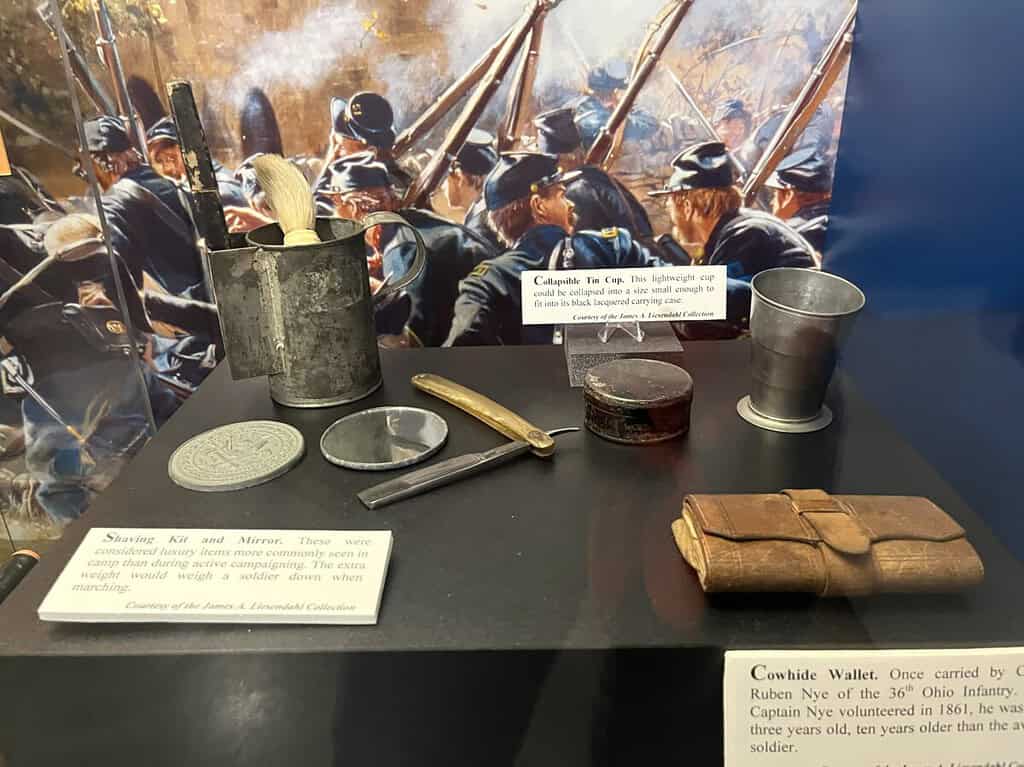
In addition to information regarding the railroads, the museum displays Civil War artifacts, including slave shackles, handguns, rifles, musical instruments used by the army, and even a handwritten letter from Private Summers to his family in Big Shanty (the former name of Kennesaw). Personal effects from soldiers included a wallet, Bible, shaving kit, and playing cards.
After the Battle of Atlanta exhibit, which features a bent piece of railroad track, the museum highlights the importance of railroads in the postal and logging industries. This moves visitors to the next section of the Southern Museum.
The Glover Machine Works: Casting a New South
The second major exhibit of the museum features the history and artifacts from the Glover Machine Works. But first, it’s important to step back a few generations to see the indelible mark the Glover family left on the area.
A large display explains that the Glover family patriarch, John Heyward Glover, Jr., arrived in Marietta in the late 1840s. He established the Marietta Steam Tannery, became the first Mayor of Marietta in 1852, and co-founded Georgia Military Institute (now Woodward Academy). He also owned a bank, a telegraph company, and a cotton warehouse. His vast land holdings included land later donated for the Confederate Cemetery and Glover Park in the middle of Marietta Square. Union troops burned the tannery, but you read about the history and see historic pictures from this post written by Dean Land of OurTravelCafe.com.
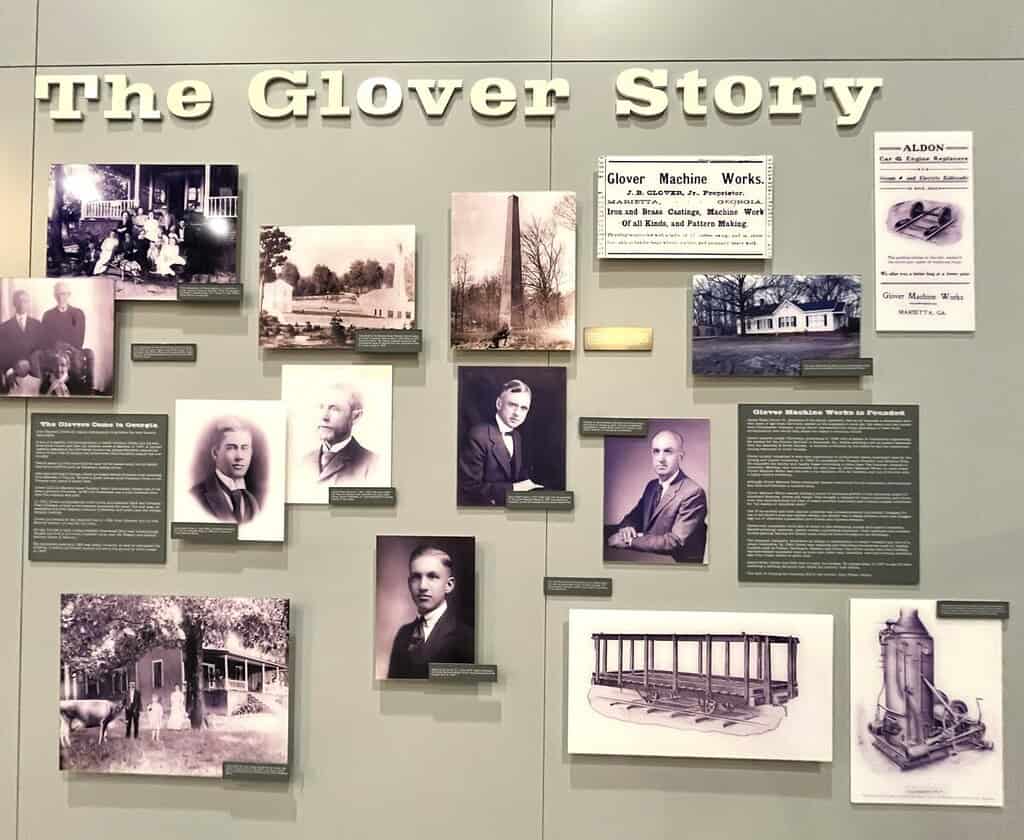
Glover Machine Works begins with grandson, John Bolin Glover II. A mechanical engineer, the younger Glover first worked for Marietta and North Georgia Railroad before purchasing Phoenix Foundry & Machine Shop in 1892.
The renamed Glover Machine Works made steam-powered machinery, such as the popular log-skidder for the timber industry. Soon, however, the company began repairing locomotives. This led to the company building over 200 locomotives during its history.
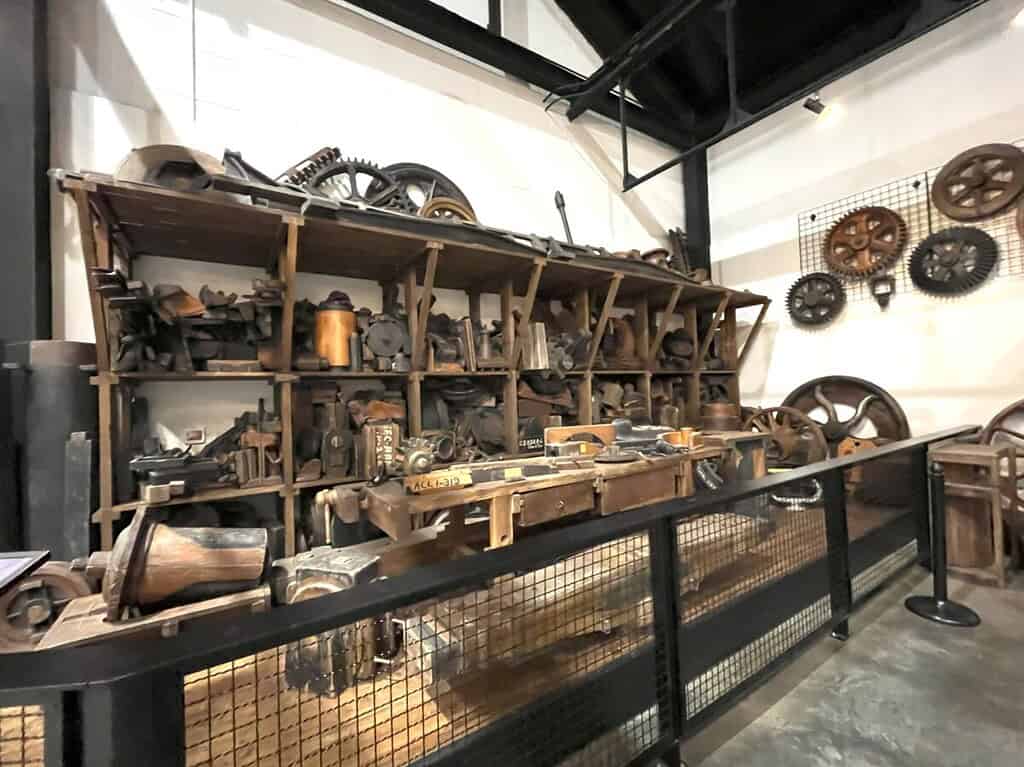
After closing the Marietta facility in 1995, the Glover family donated all the company’s records and equipment to the Kennesaw Civil War Museum. (The museum began in 1972 as the Big Shanty Museum.) With this large collection, the museum built a replica of the Glover Machine Works building and reopened as the Southern Museum of Civil War & Locomotive History, a Smithsonian Museum Affiliate.
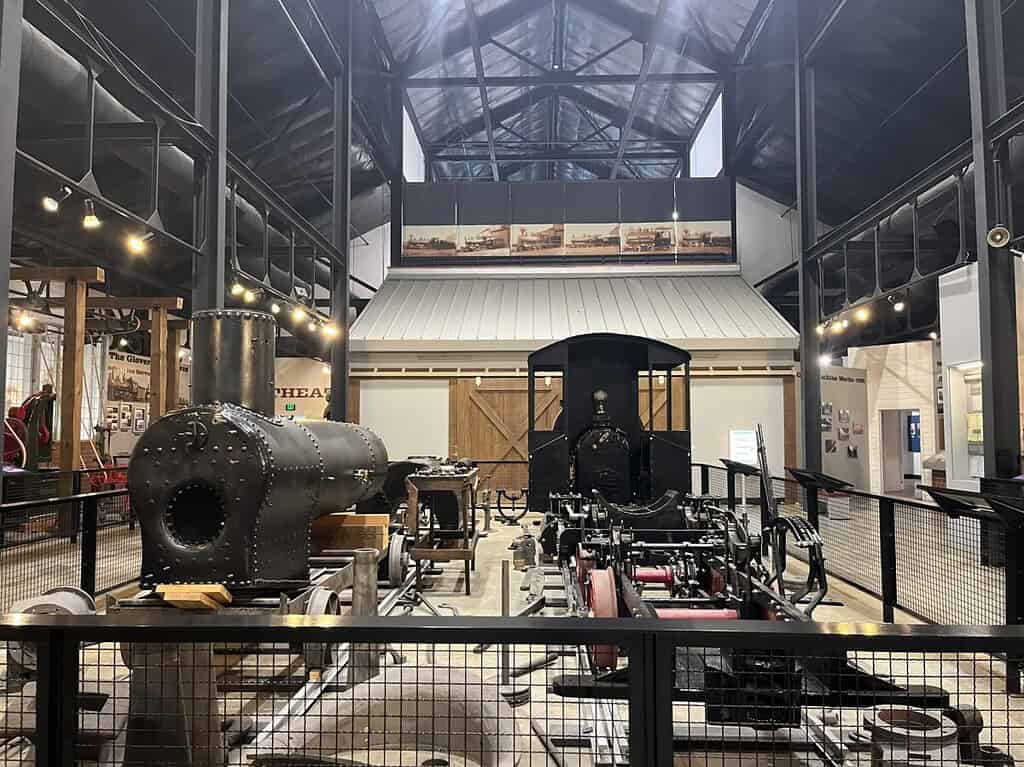
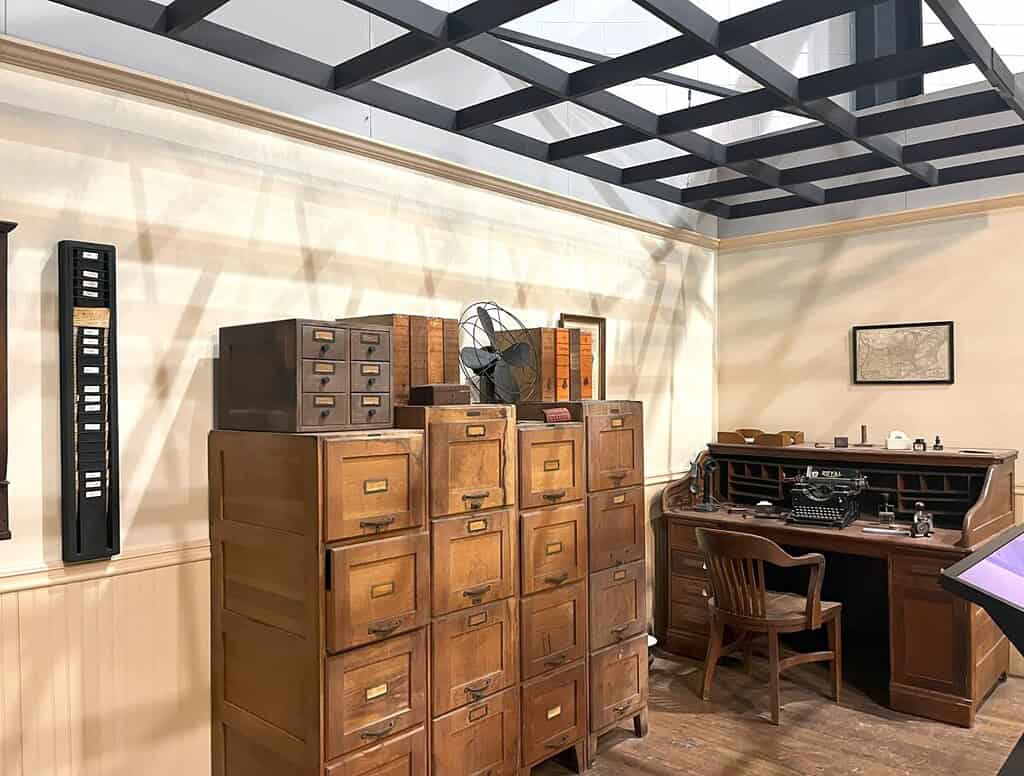
It’s quite impressive walking around the reproduction of the Glover Machine Shop. The administrative offices felt like stepping back in time to the 1930s with wood filing cabinets and a typewriter. Thing 1 and I viewed an unfinished locomotive in the process of being built. We also walked past the pattern shop and lots of machinery. Also on display at Southern Museum is a 1926 locomotive built for the Jellico Splint Coal Company. When the coal company defaulted on payment, Glover Machine Works repossessed it.
Jolley Education Center
Before heading to the Southern Museum’s next exhibit, we stepped into the Jolley Education Center. One of the reasons we didn’t revisit the museum sooner was that I felt there wasn’t enough for kids. In fact, neither of our children remembers our visit when they were in preschool.
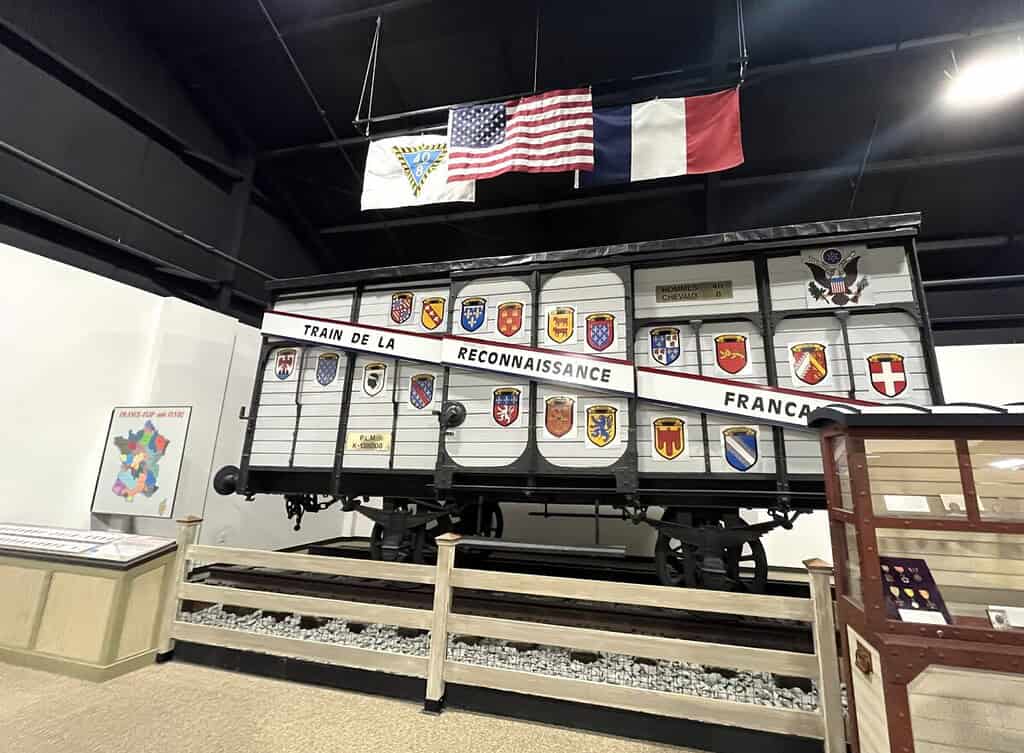
This newer expansion features a kid-friendly environment with play train sets, a train simulator, and classroom space. Also, a boxcar from the Merci Train (Train de la Reconnaissance) sits in the area. After WWII, France sent each state in the US a boxcar filled with French goods. This was in gratitude for US assistance during the war.
The Great Locomotive Chase (aka Andrews Raid)
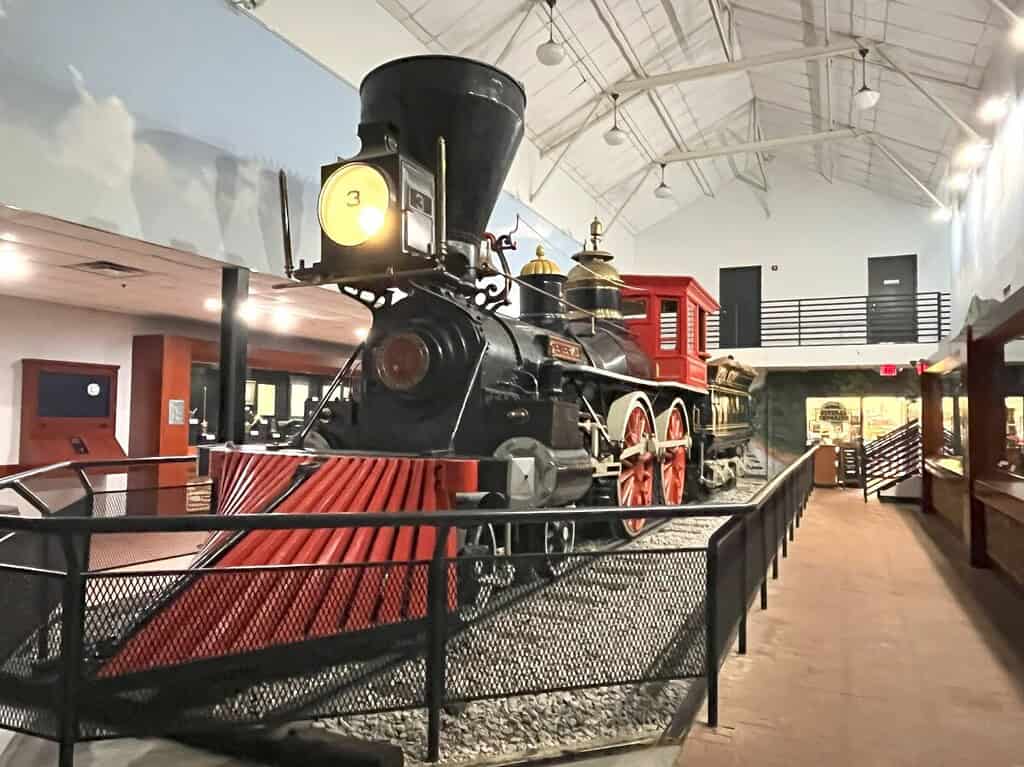
The best overview of the Andrews Raid is the 20-minute film at the museum. Even though the acting was a bit “hokey,” I really enjoyed it. After the movie, we followed the train tracks painted on the floor to learn about all the players in the raid. After entering a tunnel, we came to a huge room featuring the General, the steam-powered locomotive.
Union spy James Andrews, 18 soldiers, and one civilian met at the Fletcher House in Marietta in April 1862. The Fletcher House (now Marietta History Center), was the former site of John Heyward Glover’s cotton warehouse. The following morning, the gang wore regular clothes and rode the train eight miles to Big Shanty (now Kennesaw). During the breakfast break at Big Shanty, which didn’t have telegraph service, the raiders detached the cars and stole the locomotive the General. The purpose was to destroy the railroad tracks and sever telegraph lines all the way to Chattanooga.
As you can imagine, the Southerners didn’t take this lightly. Train conductor William Fuller, Anthony Murphy, and others pursued the raiders. They first started chasing the General by handcar and then by the locomotives Yonah and William R Smith. At Calhoun, the Southerners jumped on the Texas, driving it in reverse, to overtake the General near Ringgold. The 87-mile pursuit lasted over seven hours but resulted in the capture of Andrews and his men.
Following the movie, we followed the train tracks to learn all about the players in the locomotive chase. The South executed eight of the raiders, including Andrews. Others were held prisoner, but a few escaped. The newly established Medal of Honor was given (many posthumously) to 19 of the Andrews raiders. However, James Andrews and the other civilian, William Campbell didn’t receive it because they weren’t officially in the military.
The railroad tracks led us through a tunnel to a big room housing the General. Along the walls were movie posters about the chase, as well as more Civil War memorabilia.
Conclusion
Although there is a kid-friendly section, the Southern Museum still appeals to adults, especially those interested in history. We spent about an hour in the museum, but could have spent much more time. For more information about the museum, visit the website here.
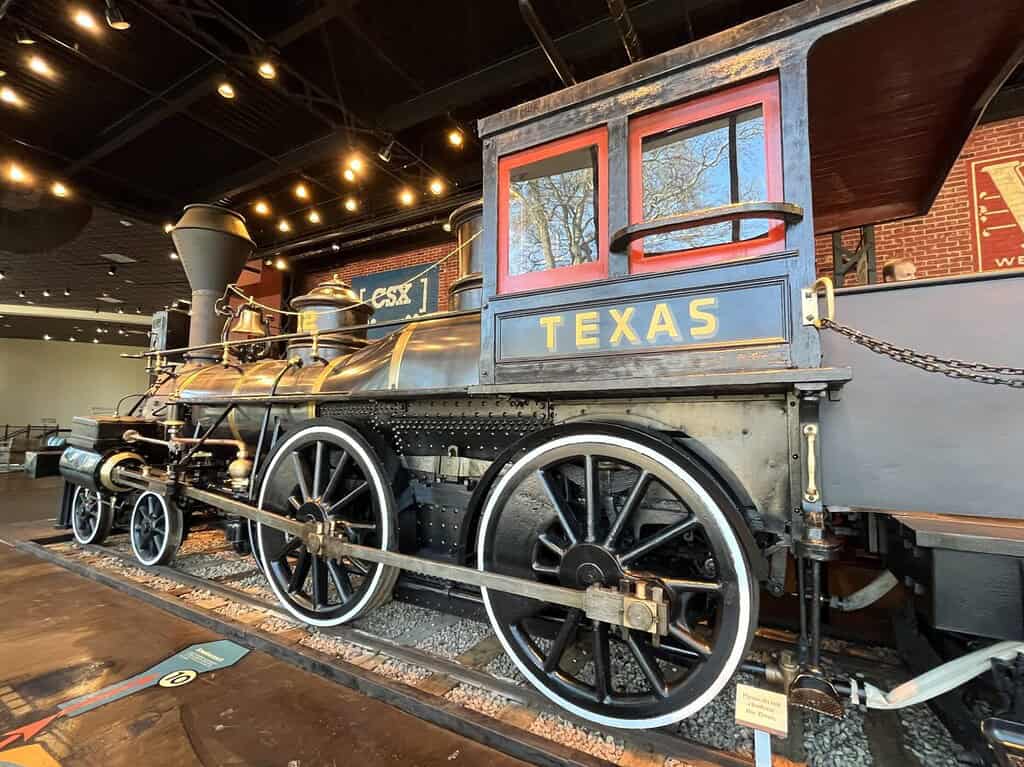
If you’re interested in seeing the Texas, the locomotive that caught up to the General, visit the Atlanta History Center.